Divination Culture & Texts
Qian and Kun: Six Lines and the Words Around Them
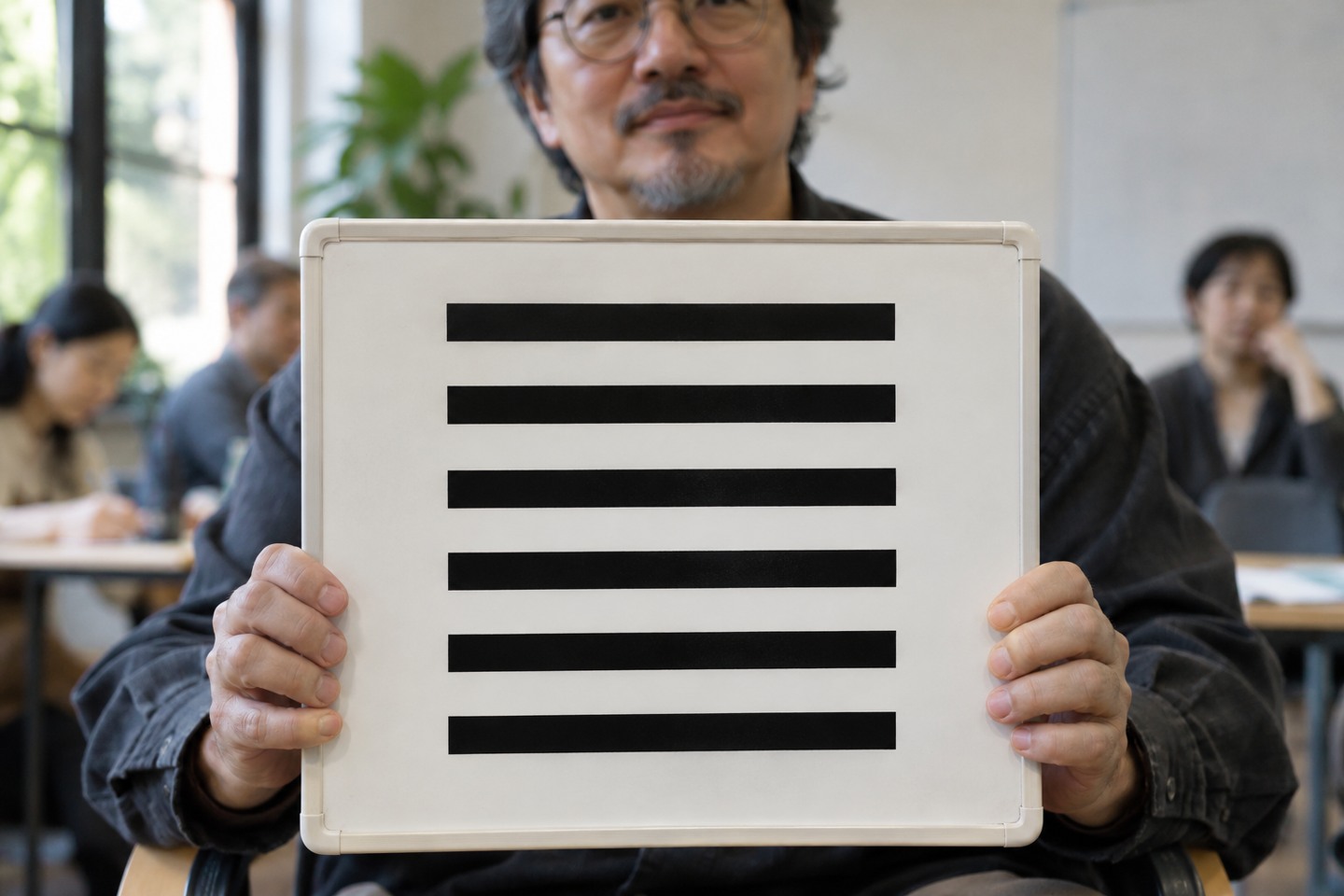
Six unbroken lines make a figure that looks remarkably uniform. Six broken lines make another. It is tempting to turn the pair into two simple answers: act or wait, strength or weakness, yes or no. Reading the Yijing, also known as the I Ching or Book of Changes, soon complicates that shortcut. A single figure comes with words, and those words can distinguish the situation at one line from the situation at another. Qian and Kun, the first two hexagrams in the received sequence, offer an unusually clear introduction to the difference between recognising a symbol and reading a passage.
A small figure attached to a substantial book
Columbia University’s Asia for Educators teaching guide introduces the Yijing as a book and explains its figures through whole and broken lines. Three lines form a trigram. Two trigrams combine into a six-line hexagram, with 64 possible arrangements. Whole lines are associated with yang and broken lines with yin.
Those terms belong to a tradition of complementary relationships. An introductory visual distinction helps you recognise the figures, but it cannot replace their accompanying text. Knowing how a symbol is assembled is the start of reading it.
For this comparison, we will select Qian and Kun deliberately. This is a close-reading exercise, rather than a cast or a prediction. Set aside the question of which figure you might obtain through a divination method and look at what the selected texts actually say.
That approach also creates room for learning without requiring a major personal decision. You can compare the figures, check the line positions and notice how a translation directs attention before asking how any passage might relate to your own circumstances.
Six rows, including the gaps
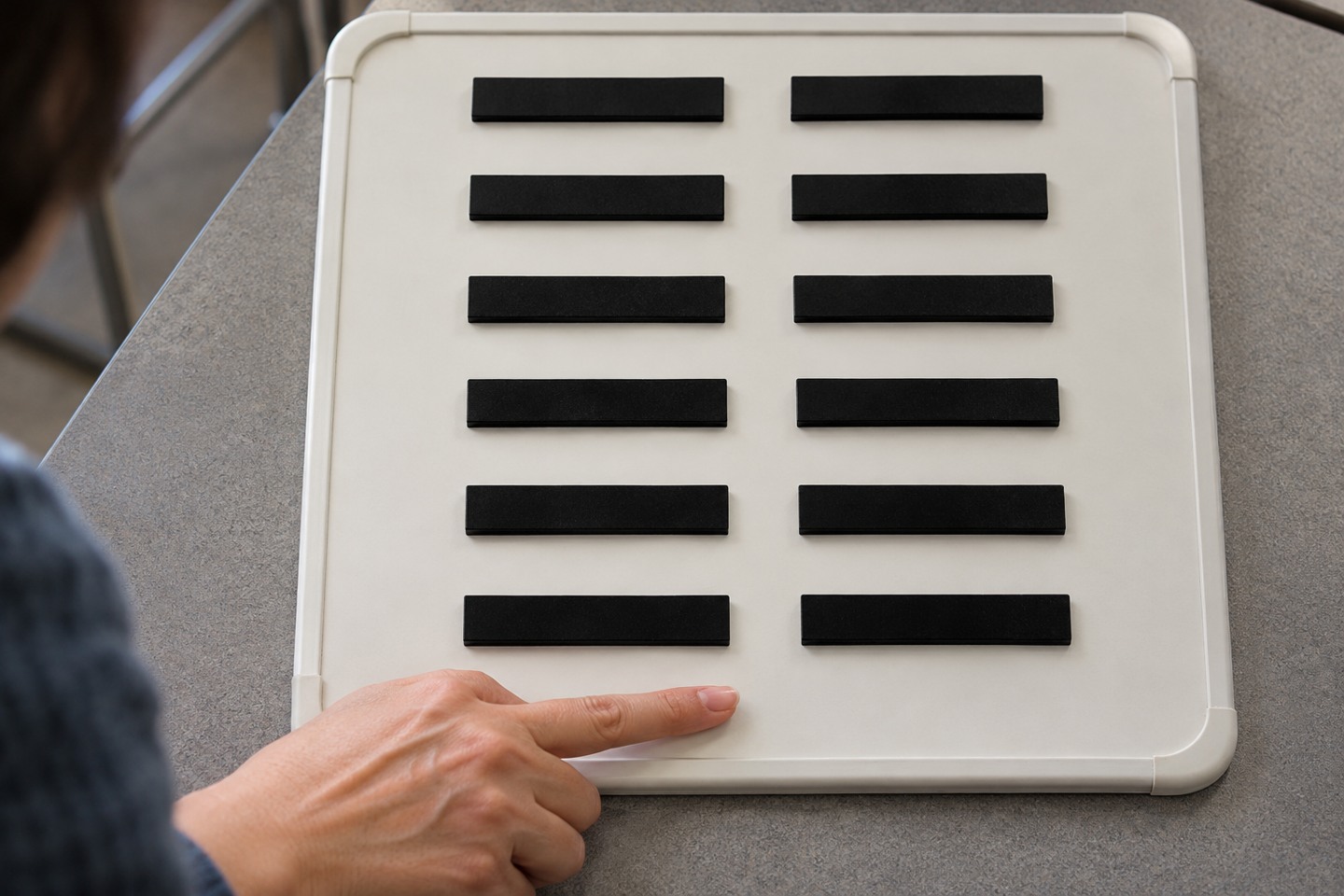
Qian has six whole lines. Kun has six broken lines. Each broken row counts as one line, even though a teaching aid might use two separate pieces to represent it. Six pairs of magnets therefore represent six divided lines, rather than a twelve-line hexagram.
The two original illustrations accompanying this article use modern teaching boards. The complete bars in the header represent Qian. The paired bars in the section image represent Kun. They are visual aids for this discussion, not ancient objects, casting implements or records of a consultation.
Start with the bottom row as line one and work upwards to line six. James Legge’s notes to the first hexagram explicitly explain this numbering. A reader who automatically starts at the top can attach a passage to the wrong position while still looking at the correct overall figure.
A practical first check is to point to the lowest row before opening the text. Then locate the named line in the edition you are using. This small act keeps a spatial convention from becoming an unnoticed interpretive choice.
Qian gives different situations to similar-looking lines
In the historical translation by James Legge, Qian appears as Khien. Its first-line passage presents a hidden dragon and counsels against immediate action. The fifth has a dragon in flight, while the topmost line concerns exceeding appropriate limits. All three positions are represented by whole lines.
The contrast matters for reading. A shorthand description such as “active” cannot do the work of all three passages. The same line type belongs to situations involving preparation, visible activity and overextension. Looking at the complete figure does not tell you which line statement you are discussing.
Try a close-reading note with three columns in your own journal: position, image and question. For the first line, you might ask what still needs preparation. For the fifth, what would make an undertaking ready to become visible? For the sixth, where might an effort have outgrown its useful limits?
These questions are original suggestions for reflection. They do not translate every word of the passages or establish a universal divination rule. Their value is that they remain connected to different textual situations instead of making the whole figure repeat one slogan.
Consider a collaborative project that has not yet been announced. Quiet preparation might suit its early stage. A later launch may need visible leadership. Continuing to expand its scope after resources are exhausted could create another problem. The example shows why context can change the usefulness of advice about activity.
Kun also contains more than one response
Legge’s second hexagram, Khwăn, corresponds here to Kun. Its opening statement includes the image of a mare and firmness. The first line uses frost and the coming of stronger ice. Elsewhere, a tied sack supplies an image of restraint. The divided lines consequently accompany several different images and circumstances.
Calling Kun passive and ending there would leave that variety unread. In a project, attentiveness can involve substantial work: understanding what has already been agreed, recognising an early warning or deciding which information can responsibly be shared. A pause in outward activity need not tell us how much attention the situation requires.
For the frost image, ask which small, observable signs deserve further investigation. Keep the answer specific. A missed reply could have many explanations; the useful action might be to clarify a deadline. The image can prompt a question without providing evidence about another person’s motives.
For restraint, distinguish confidentiality from avoidance. A team may need to protect unfinished work while still communicating a realistic delivery date. Reading a passage can help articulate that tension. Deciding what to do still requires knowledge of the actual agreement and the people involved.
This exercise works best when you keep the text, your association and your proposed action in separate sentences. A later reader should be able to see where the translation ends and where your own application begins.
Names and translations deserve a cross-check
Moving between editions can introduce another difficulty. This article uses Qian and Kun, while the linked Legge chapters use Khien and Khwăn. A modern reader should check the hexagram number and the six-line figure alongside the name, especially when consulting an older transliteration.
Translation also affects the immediate impression a passage makes. An unfamiliar animal image, a word such as firmness or an old form of address may invite an easy modern substitute. Before replacing it, record the wording and read the surrounding explanation. A quick label can erase precisely the detail that makes a passage interesting.
If you compare two editions, note the translator and the specific passage. Differences can become questions for study. They do not automatically prove that one edition has revealed a personal message that the other concealed.
Likewise, keep a selected textual comparison distinct from a reading produced through an established consultation method. This article has not generated changing lines or supplied rules for choosing among several line statements. Learning the figures and reading their passages is a worthwhile stage in its own right.
Let the passage sharpen the question
Return to the project example and choose one real uncertainty: whether to announce a date, request help or revise the scope. Read a short passage slowly. Write down the question it raises, then identify the information needed to answer that question in your situation.
For an announcement, that information might include a confirmed schedule. For asking for help, it might be a clear account of the work remaining. For revising scope, it might be the resources the team can actually commit. The reflection becomes useful through what it helps you notice and investigate.
Qian and Kun reward this attention because their simple shapes are easy to recognise while their texts resist being reduced to one command. Six rows supply an address within a book. The reading begins when you follow that address into the words, keep track of the line and consider the circumstances carefully.
Sources and further reading
The Columbia teaching guide supports the introductory structure and terminology. The two linked Legge chapters supply the historical translation and line passages discussed here. The project examples and journal exercise are original editorial suggestions. Both images are original AI-generated photographic-style illustrations of imagined modern teaching aids, with six whole or six divided rows checked against the figures. Continue with questions preserved on Shang oracle bones or moon blocks and the framing of a question, or explore a separate tarot-based approach in our guide to writing tarot questions.