Divination History & Culture
Oracle Bones: The Questions That Survive from Shang China
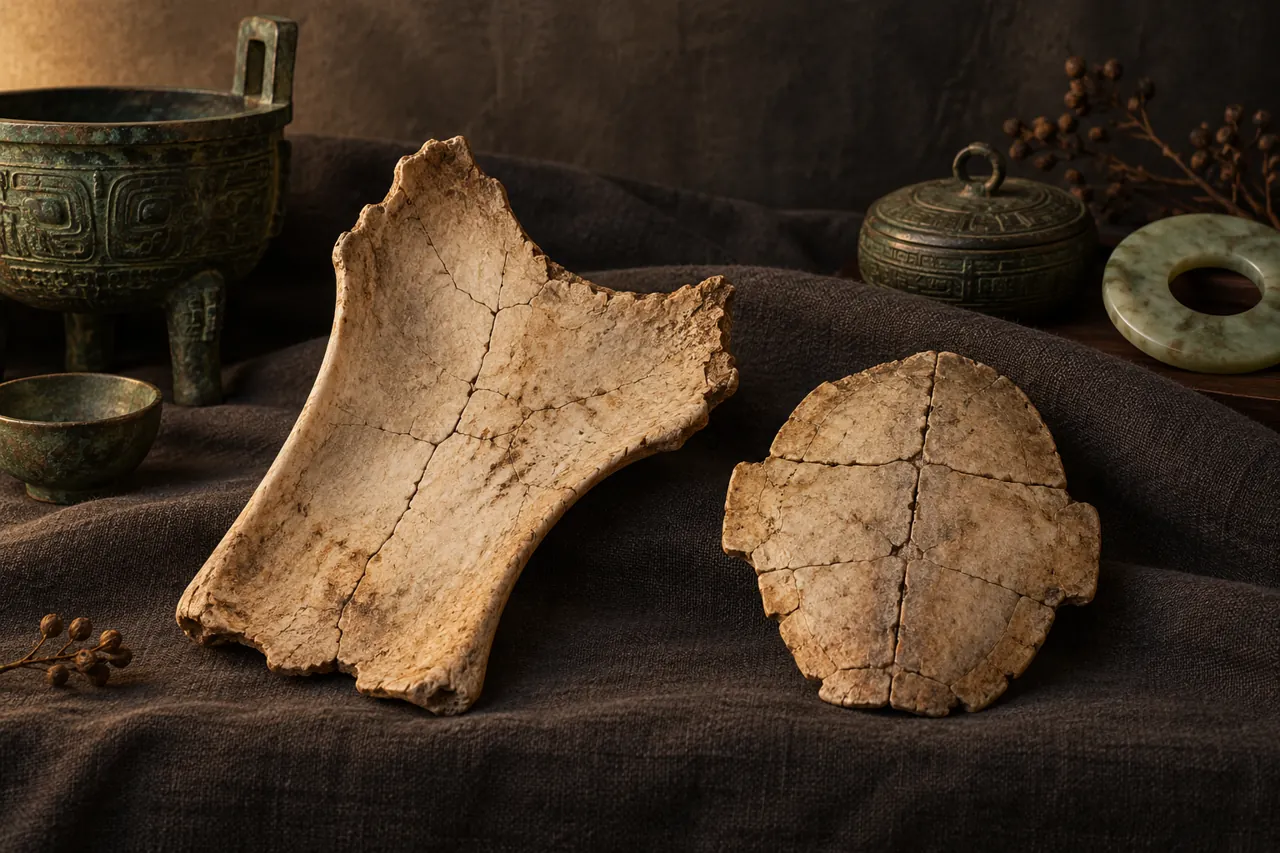
Will the rain arrive? Is a campaign advisable? What does an unsettling dream mean? Questions preserved on ancient Chinese oracle bones bring a distant court surprisingly close. Their value today is not that they give us a method for predicting our own future. They let us examine how a particular society gave uncertainty a material form: a prepared surface, a crack, an interpretation and, sometimes, a record of what followed.
A place and a period, rather than a timeless mystery
Oracle bones belong to a specific archaeological and cultural setting. UNESCO’s account of Yin Xu, near modern Anyang in China, identifies it as a late Shang capital and explains the importance of its inscriptions for studying early writing, beliefs and social organization. The bones are part of a larger setting of palaces, ancestral shrines and royal tombs. Isolating them as mysterious objects misses that setting.
Dates also deserve careful labels. The Shang dynasty spans a longer period than the late Shang material associated with Anyang. A dynasty-wide date on a museum page is not necessarily a precise date for an individual inscription. The Metropolitan Museum of Art’s oracle-bone record, for example, identifies an inscribed bone as Shang and supplies its medium, dimensions and accession number. Those ordinary catalogue details establish what object is being discussed; they do not translate its writing.
This is a useful starting discipline for any encounter with an ancient object: locate it before interpreting it. Ask where the record places it, how narrowly it is dated and which claims concern that specimen. An attractive image caption cannot answer all three questions by itself.
How a question became a physical record
The Smithsonian’s explanation of Shang divination describes prepared shoulder bones and tortoise shells. Grooves or pits helped direct the effect of a heated implement, producing cracks that were interpreted in a ritual involving the ruler, diviners and ancestral spirits. Writing preserved information about these consultations.
Its teaching account distinguishes an introduction, a charge or topic, a prognostication and a verification of the outcome. These are useful categories for reading a record, rather than a guarantee that every surviving fragment preserves every part. The crack, the statement about it and a later outcome notice are different kinds of evidence. A photograph may show their physical proximity without making their relationship obvious to an untrained viewer.
That distinction changes the experience of looking. Instead of searching the bone for one hidden message, we can ask which stage of an encounter survives. Are we seeing the concern that prompted a consultation, an authoritative reading of the result, or something reported afterward? Missing sections should remain missing in our account.
The concerns are concrete
The Asian Art Museum’s introduction presents two fragments with translations involving danger, military action and rain. It also identifies births, harvests, hunts and dreams among the subjects of oracle-bone records. Its examples include statements framed in positive and negative forms. A consultation could concern whether something would happen or whether a particular action should be taken, rather than an open invitation to tell a life story.
These topics make the records compelling without making their world identical to ours. Rainfall might look like a familiar worry, but the person asking, the ritual authority and the consequences of the answer matter. A royal question about a campaign cannot simply be relabelled as modern career advice. Similar human concerns can coexist with very different institutions and beliefs.
It is also worth noticing whose concerns enter the record. Court-related material gives access to a powerful social setting. It should not automatically be treated as a survey of what every person in Shang society thought. Asking who commissioned, interpreted and preserved a record helps prevent an elite archive from becoming an imagined universal voice.
Writing can outlast the purpose it first served
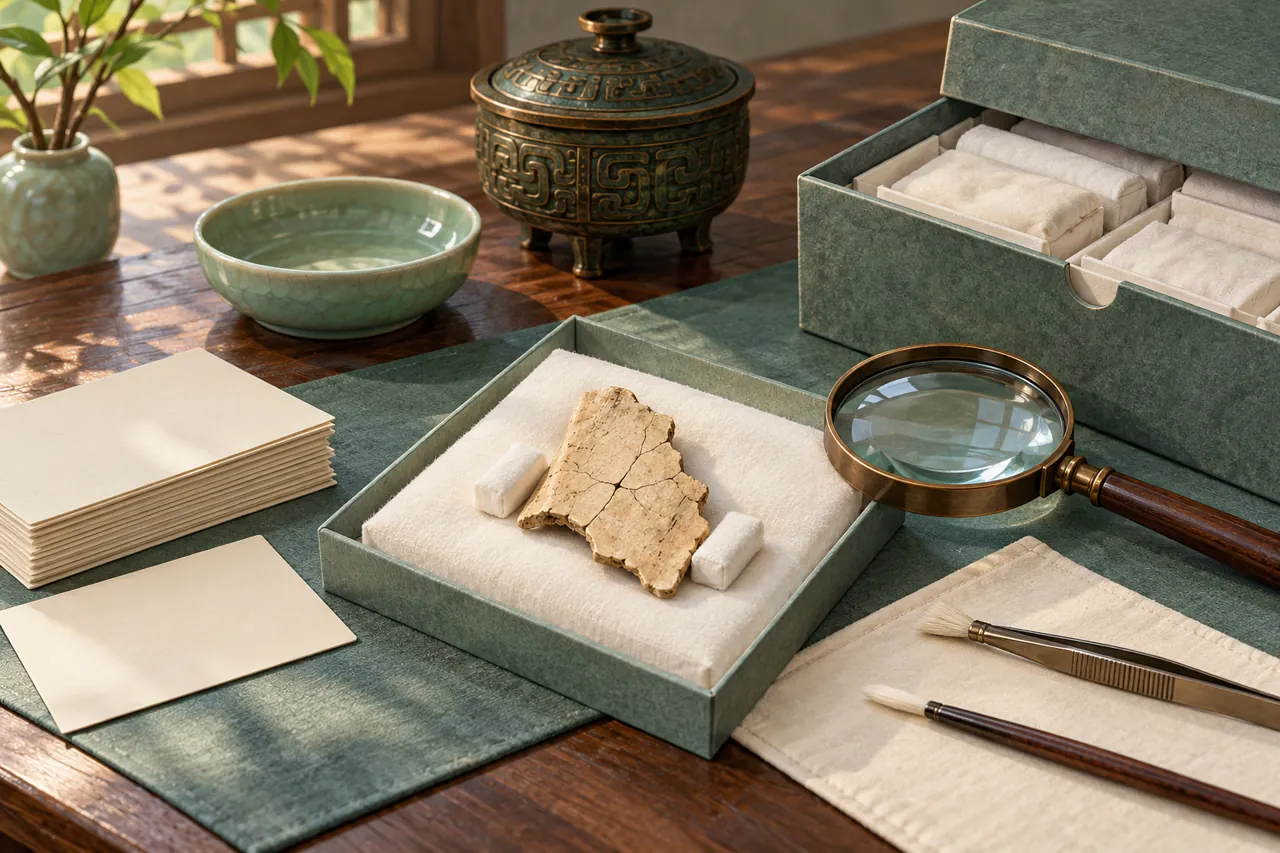
The British Library’s record for oracle bone Or 7694/1595 places the object in its Couling–Chalfant collection and describes oracle bones as bearing the earliest surviving form of Chinese writing. The page also documents a modern three-dimensional recording project. An object once involved in consultation can now be examined as a source for writing, material practice and historical observation.
The change of purpose is striking. A participant might have wanted guidance about an immediate concern. A researcher asks about language, sequence, provenance or the relationship between marks and material. Neither question can be answered merely by calling the object an oracle. The word identifies a use, but it does not exhaust what the object can tell us.
A digital model adds access without removing the need for interpretation. Being able to rotate a fragment or enlarge a surface is different from being able to read it. The catalogue record, scholarly translation and archaeological context remain necessary companions. Greater visual detail should lead to better questions, rather than confidence that every mark explains itself.
A recorded outcome is not a controlled test
The presence of outcome notices is especially interesting. It means a record can preserve more than a question and an answer. But it would be a leap to treat such notices as proof that divination reliably predicted events. To assess predictive performance, we would need a defined body of cases, clear success criteria and attention to missing or ambiguous results. A memorable surviving example cannot supply that comparison.
Historical evidence and supernatural claims therefore require separate judgments. An inscription may be strong evidence that people conducted a consultation and recorded a particular result. Establishing communication with an ancestor is a different claim. Respect for the historical participants does not require us to collapse those two statements into one.
Nor does caution require dismissing the practice as meaningless. The records can illuminate how authority was expressed, how decisions were framed and what was considered important enough to preserve. Those are substantial historical questions. They remain worth studying even when we do not accept the ritual’s explanation of how an answer arrived.
How to explore an oracle-bone page thoughtfully
Try reading a museum entry in three passes. First, identify the object: institution, accession number, material, place and date range. Second, separate description from translation. A note that a surface is inscribed is not a reading of the inscription. Third, locate the explanation of ritual use and notice whether it describes this specimen or the wider tradition.
Keep a short note of what remains unresolved. Perhaps only part of a question survives; perhaps the online record offers no translation. Resist filling the gap from an illustration or a modern symbolic dictionary. If you compare the record with another divination tradition, compare a specific feature, such as how a question is framed, rather than assuming shared origins or interchangeable meanings.
What survives is more interesting than an invented answer
Oracle bones preserve uncertainty without giving us unrestricted access to the people who experienced it. Their cracks and inscriptions belong together, yet each demands a different kind of reading. The most rewarding encounter begins with that tension: an intimate concern survives inside a social and ritual world that requires patient explanation.
For another tradition with a very different documented history, see our story on tarot’s game origins. For contemporary reflective practice, our tarot question guide addresses a separate activity. Neither is a key for decoding Shang inscriptions. The bones deserve attention on their own terms, as records of questions whose historical importance extends well beyond the answers once sought.
Sources and further reading
Archaeological setting: UNESCO, Yin Xu. Object documentation: The Met, Oracle bone, 67.43.15. Ritual and record structure: Smithsonian, Making Sense of the Future. Translated examples: Asian Art Museum, Oracle Bones. Writing and digital documentation: British Library, Or 7694/1595. The reading procedure and discussion of evidential limits are Precise Arcana’s editorial analysis. Illustrations are original conceptual artwork, not reproductions or reconstructions of identified artefacts.