
TAROT GUIDE
Upright vs reversed tarot cards

Card orientation adds a layer of emphasis to a tarot reading. An upright card often expresses its theme directly, while a reversed card may show that energy as blocked, internal, delayed, avoided or overextended. Neither orientation is automatically good or bad.

What an upright card can show
Upright cards usually present the card’s recognizable theme in an available or outward form. The Magician, for example, can emphasize focused initiative, while the Two of Cups can emphasize mutual exchange. Context still decides whether that expression is balanced.
An upright card can also describe excess. Too much drive, certainty or responsibility may be as relevant as too little. Orientation is a clue, not a substitute for reading the question and position.

Five useful ways to read a reversal
A reversal may indicate blocked expression, an inward process, delay, avoidance or an extreme version of the upright theme. Test these possibilities against the situation. The reversed Ten of Wands might mean releasing a burden, refusing necessary responsibility or feeling overwhelmed in private.
Choose the interpretation that connects with observable circumstances and the surrounding cards. Do not force every reversed card into the same formula.
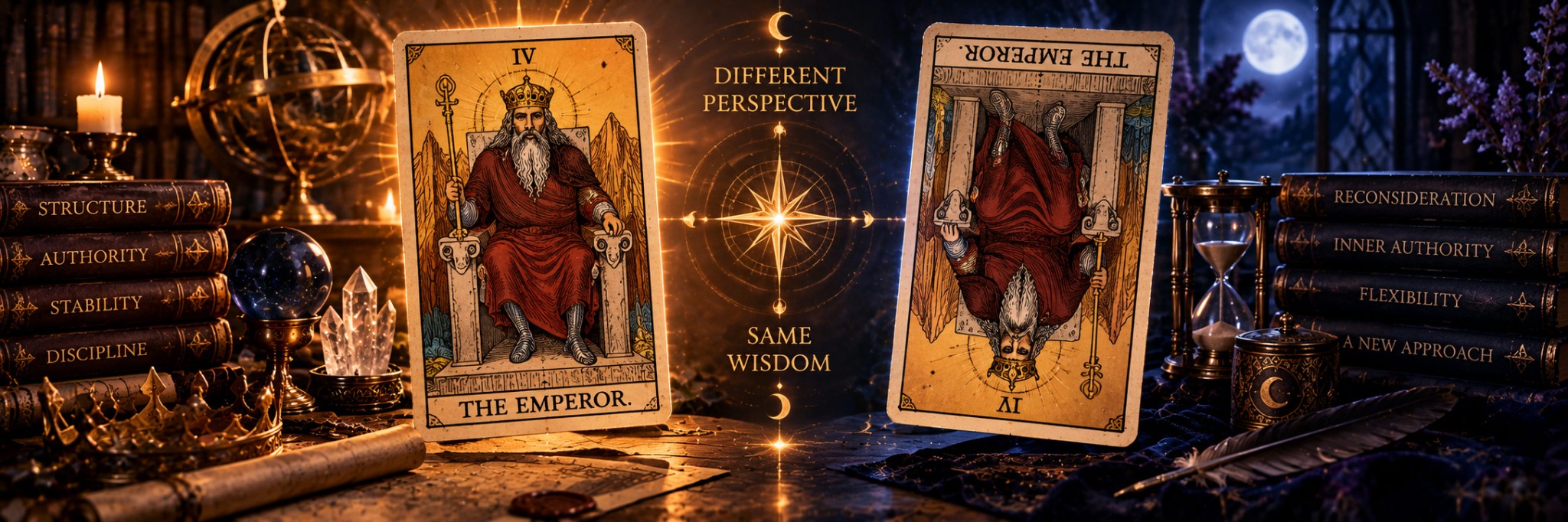
Reversed does not mean bad
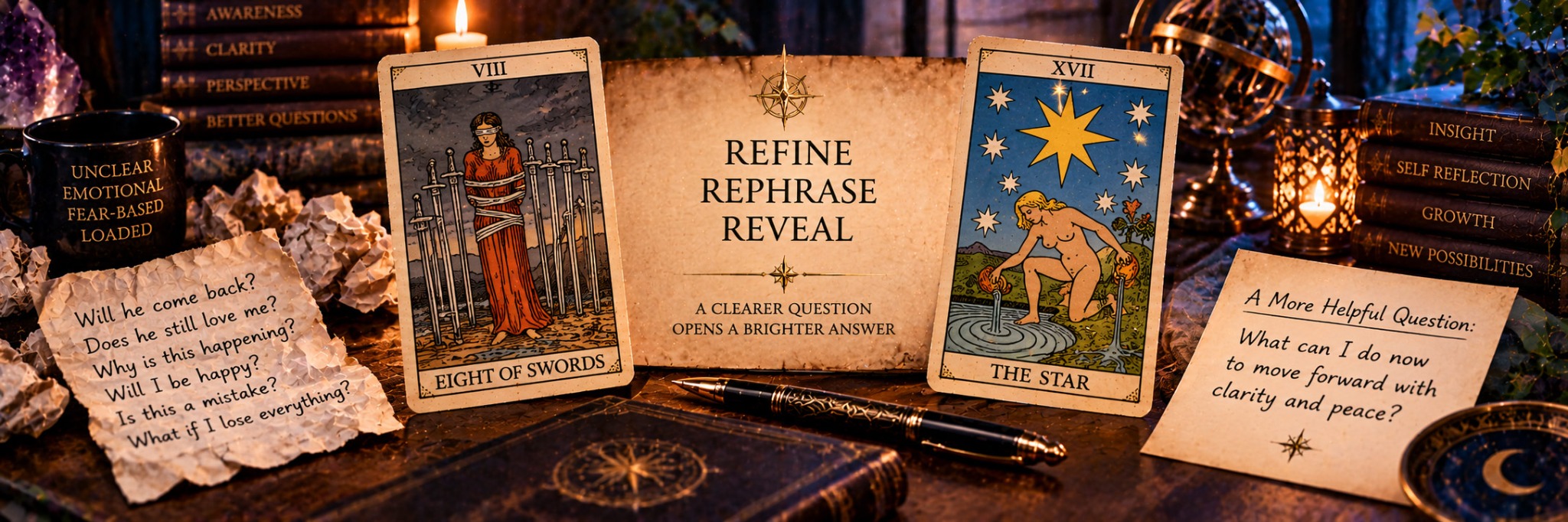
Some upright cards carry challenging themes, and some reversals show relief or reconsideration. The reversed Eight of Swords may describe recognizing an option that was previously hidden. The upright Three of Swords can still ask you to face grief honestly.
Read the card’s full range before assigning a positive or negative label.
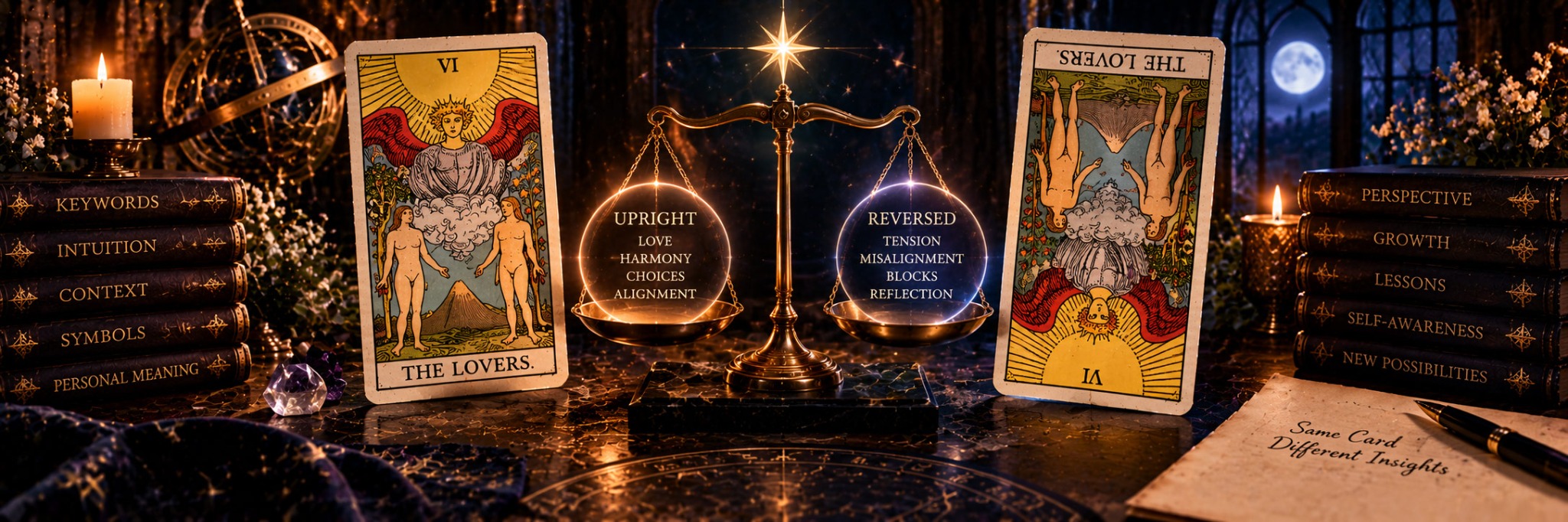
Use the spread position
A reversed Past card may show an unresolved influence or a lesson that remained private. In the Present, it may point to a blockage or internal shift. In the Future, it may suggest a delay, an adjustment or a pattern that can be changed. Review the three-card spread guide for more on position.
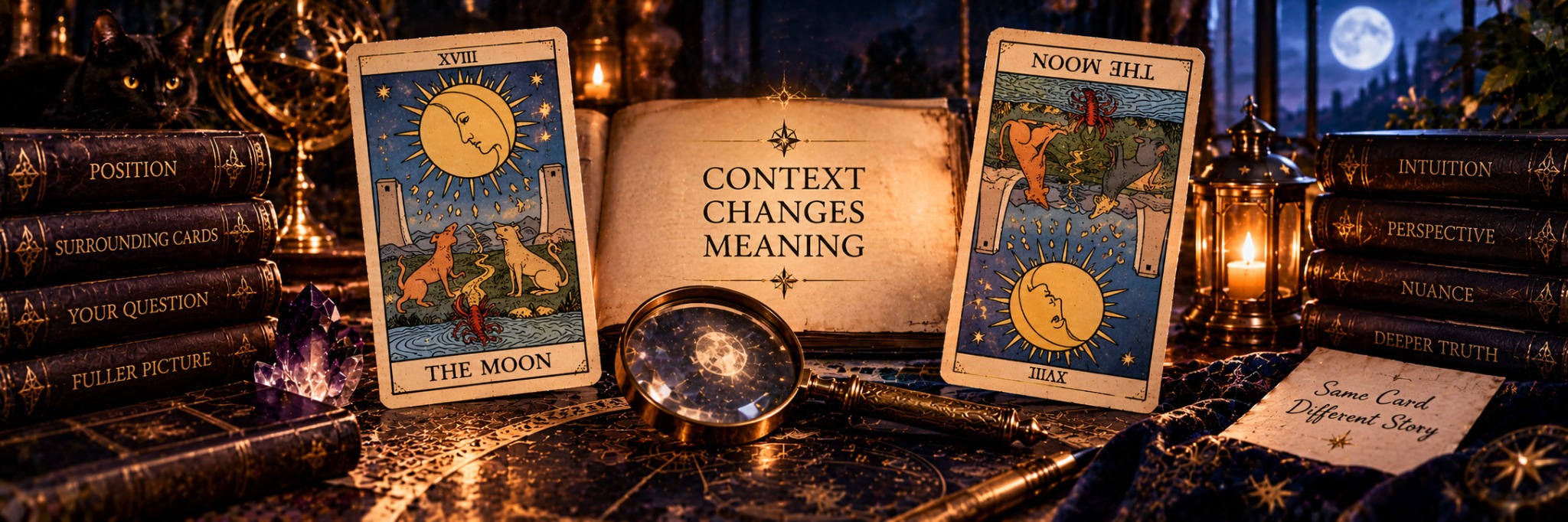
Read interactions between cards
Compare direction, suit, number and imagery. Several reversed cards may show hesitation or energy turning inward, but they can also mean that the question needs rest and reassessment. One reversed card among upright cards may identify the exact area where progress meets resistance.
Say what you see before interpreting it: “Two cards emphasize movement, while the reversed center card pauses it.” That observation creates a clear bridge to meaning.
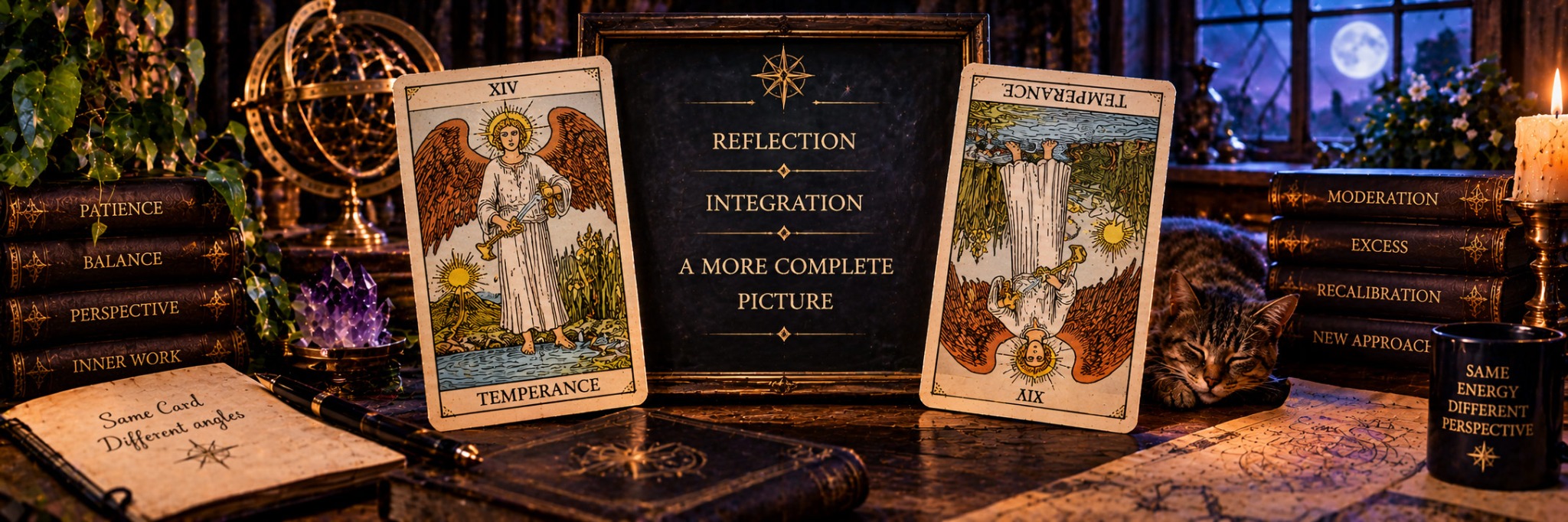
Choose a consistent method
Decide before shuffling whether you will use reversals. If you do, allow cards to rotate naturally and keep the deck handling method consistent. If you do not, you can still explore blocked or shadow expressions through the question and card relationships. Both systems can support thoughtful reading.
Frequently asked questions
Should I turn a reversed card upright?
Leave it as drawn for the reading, then rotate it afterward if you prefer. The orientation is part of the prompt, not a permanent condition.
What if every card is reversed?
Check that the deck was not accidentally rotated. If the draw is valid, consider whether the situation involves inward work, delay or a need to reconsider assumptions rather than predicting disaster.
Use these ideas as prompts for reflection rather than fixed predictions. Your choices, circumstances and reliable real-world information remain essential.
Try a Free Personalized Tarot Reading