
Numerology, Mathematics & History
Zero Is Not a Blank: Reading the Bakhshali Evidence
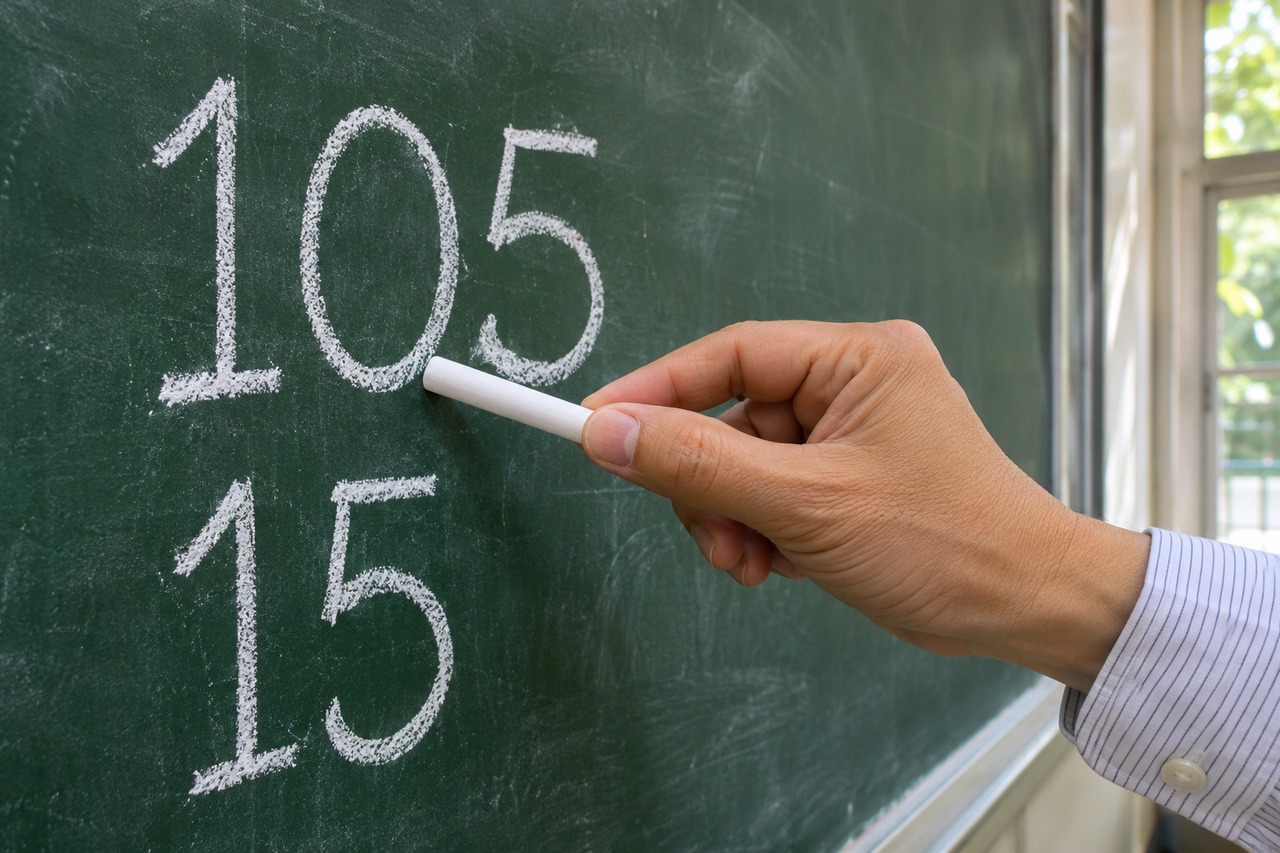
Write 105, then remove the zero. The result is 15, not a tidier version of the same number. A mark associated with nothing has helped preserve a substantial difference in quantity. That small demonstration is a useful entrance to zero’s history, where a dot, a calculation and an old piece of writing material can each answer a different question. The Bakhshali manuscript makes those distinctions particularly important. Its reputation has travelled through headlines, scholarly disagreement and revised measurements; reading that history carefully is more rewarding than collecting a single claim about the world’s oldest zero.
A zero can do work without adding a quantity
In ordinary decimal notation, 105 means one hundred, no tens and five units. The zero holds the tens position between the other digits. Removing it changes where the one sits: 15 contains one ten and five units. The printed mark has a role in the representation even though it does not contribute a positive quantity of tens.
Compare that with an elementary operation such as 5 + 0 = 5. Here zero is an operand in an addition. The result remains five, but the written expression records an operation with a number. A placeholder in a numeral and a number participating in arithmetic are distinguishable roles, even when the same familiar symbol can serve both.
These modern examples are demonstrations, not reconstructions of an ancient notation. They do not establish who first used zero, where a particular symbol originated or how a manuscript’s author understood every operation. They show why a historical claim needs to say which role is under discussion.
They also challenge an easy symbolic shortcut. Calling zero empty or insignificant does not explain what it does in a calculation. Before interpreting a numeral, it helps to identify the system that gives its position a function.
The headline belongs to a particular moment
An Oxford announcement dated 14 September 2017 presented radiocarbon findings on the Bakhshali manuscript as evidence for a zero symbol reaching back to the third or fourth century. It described a dot used in the mathematical text and explained its significance in the history of positional notation.
The same announcement identified the manuscript as fragile birch-bark leaves, found near Peshawar in what is now Pakistan and presented to the Bodleian in 1902. These are statements in a dated institutional account. The announcement’s early-age claim needs to be read alongside subsequent work, rather than carried forward as an unchanged conclusion.
This is a familiar problem with attractive discoveries. A headline is easy to repeat; its publication date is easier to lose. Once the wording becomes detached from the evidence available at that moment, an old report can sound like the current state of research.
The solution is not to dismiss every announcement. It is to keep its date and ask what appeared afterwards. A university press release, a research report and a specialist response may concern the same object while making different kinds of argument.
The later report changes the material story
David Chivall, Virginia Lladó-Buisán, David Howell and Gillian Evison’s 2024 Oxford radiocarbon report presents determinations for five folios. It explains that additional measurements were made after unexpected early results. A second determination on folio 16 showed the initial determination to be inaccurate; folio 17’s result was excluded as an outlier.
Table 1 gives folio 16 a calibrated range of 901–1032 CE at the stated 95.4 percent confidence level. The other four sampled folios have their own ranges. The authors caution against assuming all five contain carbon of the same age.
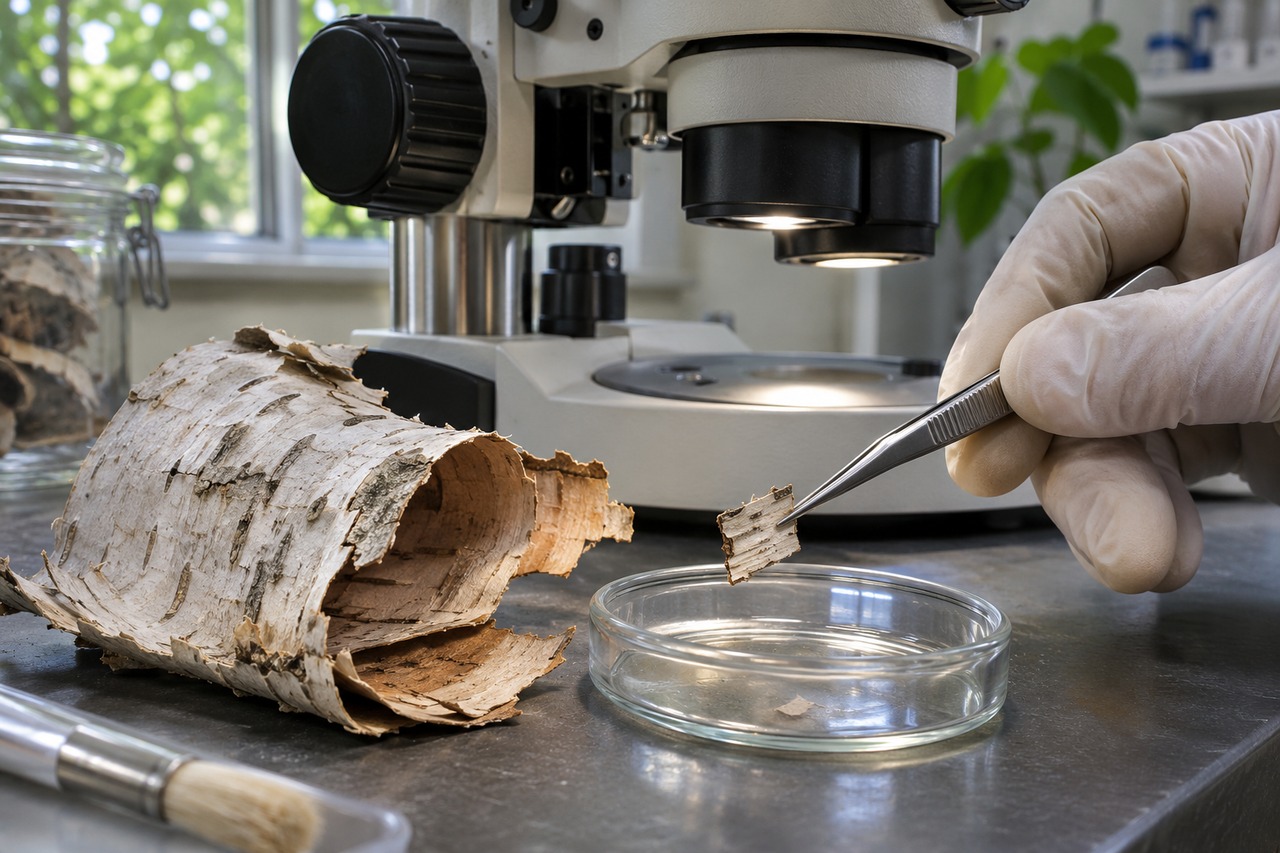
The report also states what the dating measures: formation of the bark, not the instant when writing was added. The bark had to exist before it could be written on. A material date therefore constrains the making of the surviving manuscript without directly dating the invention of every idea in its text.
That boundary is the key lesson. An old support need not carry equally old writing, and a surviving copy need not be contemporary with the first composition of its contents. Material, scribal activity and intellectual history require connected but distinct investigations.
A catalogue date still needs its label
The University of Würzburg’s Indoskript record for Bakhshali folio 16 now lists 901–1032, identifies birch bark as the material and explicitly labels the basis as calibrated radiocarbon dating with a 95.4 percent confidence interval. It records the language as Sanskrit and the script as late Proto-Sharada.
That entry is useful because the date is accompanied by an explanation of its basis. A reader can distinguish a measured material range from a year supplied by a signed colophon or an estimate based on handwriting. Those would be different forms of evidence, even if a catalogue displayed them in a similar-looking date field.
Resist turning the interval into a birthday. Choosing its midpoint and declaring that the manuscript was written in that exact year would add precision the record does not provide. Nor does a date range for one folio automatically date every other leaf or every mathematical procedure described.
What a zero does is also a textual question
In their 2017 response in History of Science in South Asia, Kim Plofker, Agathe Keller, Takao Hayashi, Clemency Montelle and Dominik Wujastyk challenged the interpretation of the initial dating announcement. They also disputed the claim that the manuscript’s zeros functioned merely as placeholders, arguing that the text includes zeros used as numbers in arithmetic.
This was a historical and mathematical argument, not another radiocarbon measurement. It asked how the written procedures should be understood. The distinction matters: a laboratory can examine the bark while a historian examines the operations, terminology and relationships within the text.
The newer material results should not be retroactively attributed to the earlier critics. A response published in 2017 could not report measurements published in 2024. Reading the sources in sequence lets each contribute its actual evidence without merging several stages into one effortless discovery story.
Do not let symbolism replace the operation
For a reader interested in numerology, zero offers a useful discipline rather than a ready-made personality description. Write down the chosen method before assigning meaning. Does it treat the whole value as a quantity, operate on individual digits or preserve a written sequence? Those choices determine what survives the calculation.
For an explicitly defined example, adding the decimal digits of both 105 and 15 gives six. That equality does not make the quantities equal. The operation has discarded their positional difference. It would be equally mistaken to say that the zero did nothing in the original numeral or that the shared sum establishes a shared destiny.
A personal association with emptiness, potential or beginning can remain a chosen metaphor. It should not be presented as a finding extracted from the age of birch bark. Dating a manuscript cannot validate a claim about someone’s future, just as an appealing interpretation cannot settle a disputed measurement.
A useful note therefore keeps three sentences separate: what the notation does, what the historical source establishes and what association you wish to explore. There is room for all three, provided none quietly substitutes for another.
A more interesting history than a trophy date
The Bakhshali manuscript remains important without needing every old headline to remain intact. Its study brings together physical material, written procedures and the difficult history of interpreting both. Revision is part of that work, rather than a reason to abandon it.
Zero’s small shape invites sweeping stories. Looking closely gives us something more useful: a mark whose role depends on context, and evidence whose meaning depends on the question asked of it. Neither is well described by treating zero as simply blank.
Sources and further reading
The four linked institutional and scholarly resources support the historical discussion; the arithmetic examples and recording method are original editorial analysis. Both images are original AI-generated photographic-style illustrative reconstructions. The laboratory scene uses uninscribed bark and does not depict the actual manuscript or a specific sampling protocol. Continue with the tetractys and historical evidence or calendars before date calculations, or explore our Tarot Guides.