
Numerology & History
Twenty-Eight and the Meaning of a Perfect Number
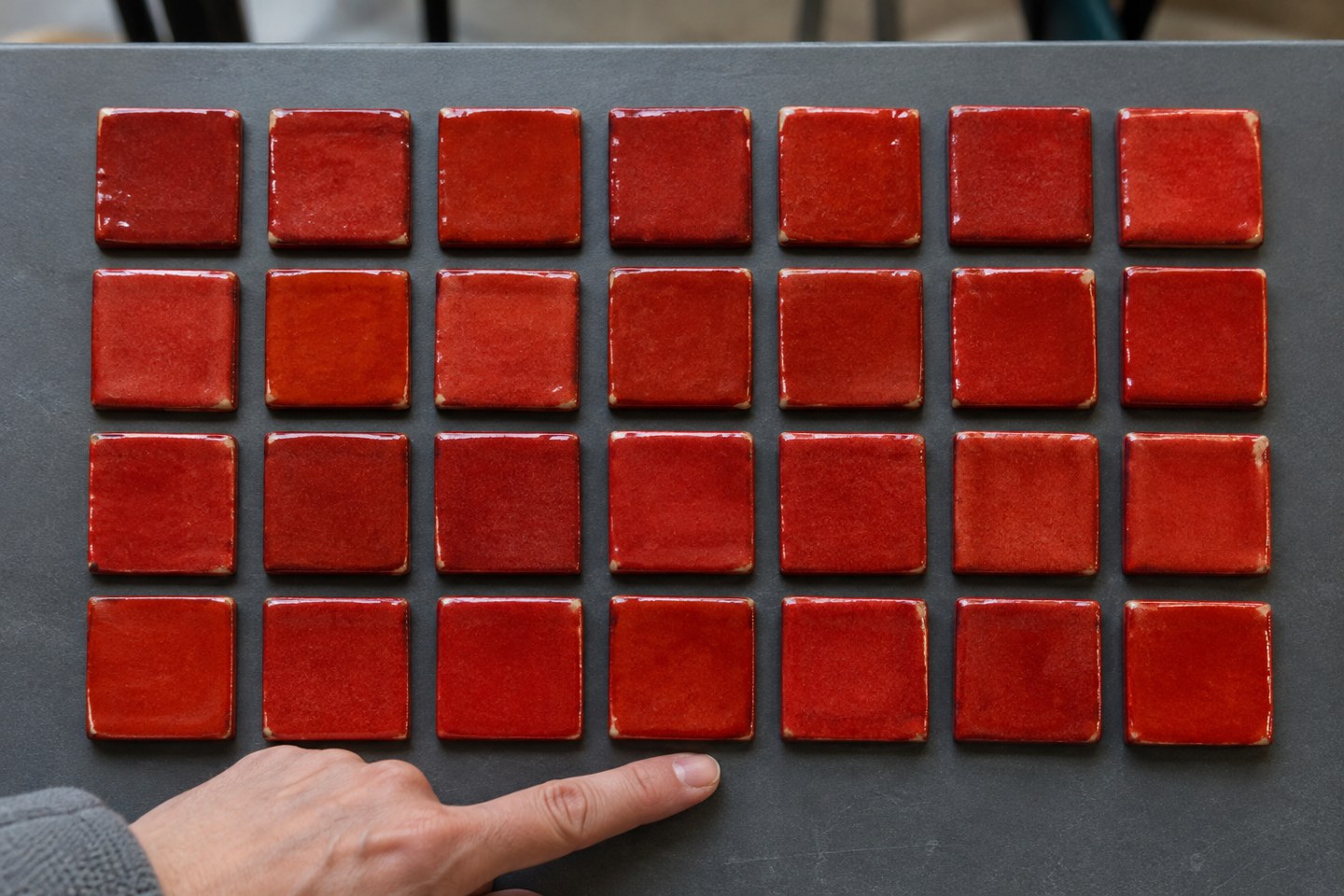
Lay out twenty-eight tiles in four rows of seven. The rectangle looks orderly, but its symmetry is not what makes twenty-eight a perfect number. That name belongs to a more exact relationship: add every positive whole number smaller than twenty-eight that divides it evenly, and the result is twenty-eight again. The parts, counted in a particular way, return the whole.
For readers interested in numerology, this is an unusually useful place to pause. A number can have a demonstrable property, an inherited symbolic meaning and a personal association, all at once. Those layers deserve different kinds of attention. Twenty-eight offers a compact exercise in keeping them distinct without losing the pleasure of finding a pattern.
What “perfect” means here
In the mathematical definition, perfection is a test rather than a compliment. Euclid’s Book VII, Definition 22 describes a perfect number through its relationship to its own parts. In modern terminology, the relevant parts are its proper positive divisors: positive integers that divide the number without remainder, excluding the number itself.
For twenty-eight, the complete list is 1, 2, 4, 7 and 14. Their sum is straightforward:
1 + 2 + 4 + 7 + 14 = 28.
The exclusion of twenty-eight matters. If you include the whole alongside its proper divisors, the total becomes fifty-six. You would have changed the test. Nor do we count the seven rows or four columns in every possible arrangement as new divisors: four is counted once, however many times you draw a rectangle containing it.
A quick way to check the list is to find factor pairs. Twenty-eight can be arranged as 1 × 28, 2 × 14 or 4 × 7. Those pairs supply every positive divisor. Remove twenty-eight and add what remains. The exercise requires neither an interpretation system nor a special date; another person can repeat it and obtain the same result.
Make the parts visible
The header image turns 4 × 7 into a physical arrangement. To explore the divisor fourteen, take two of the four rows: fourteen tiles make exactly half the original collection. Two equal groups of fourteen rebuild twenty-eight. Seven also divides the collection evenly, as the four equal rows demonstrate.

There is a useful distinction between dividing the collection and adding its divisors. Splitting twenty-eight into two groups shows why fourteen belongs on the list. It does not by itself establish perfection. To do that, write down every qualifying size—one, two, four, seven and fourteen—and add those sizes once each.
You can make that second operation physical too. Rearrange the same twenty-eight tiles into five separate groups containing 1, 2, 4, 7 and 14 tiles. Nothing is left over and no extra tile is needed. With a different starting number, the total of its proper divisors may fall short or run past the original collection. The successful fit is the property being named.
This is also a reminder about illustrations. A photograph of an attractive rectangle can suggest regularity; the divisor list establishes the claim. An image makes a relationship easier to inspect, but it should not quietly take the place of the calculation.
A construction in Euclid
Euclid gives more than a definition. In Book IX, Proposition 36, he describes a construction using a sequence that starts at one and doubles. If its sum is prime, multiplying that sum by the final term produces a perfect number.
Try the short sequence 1, 2, 4. Its sum is seven, a prime number; its final term is four. Multiply seven by four and twenty-eight appears. The shorter sequence 1, 2 has prime sum three, and three multiplied by its final term two gives six. Indeed, six has proper divisors one, two and three, whose sum is six.
The prime condition is essential. Extend the sequence to 1, 2, 4, 8 and the sum is fifteen, which is divisible by three and five. Euclid’s stated condition no longer holds. Continuing a visually pleasing sequence is not enough to justify the same conclusion.
For a symbolic reader, that last step offers a practical habit: ask which conditions make a pattern work. The method is more informative than treating every doubling, repeated digit or neat arrangement as equivalent evidence.
When arithmetic enters religious interpretation
A different use of numerical perfection appears in Augustine’s City of God, Book XI, Chapter 30. Discussing the creation narrative, Augustine connects the six days with six’s mathematical perfection. His reasoning is theological: the number signifies the completeness of the works, rather than measuring time that God needed to accomplish them.
His discussion includes arithmetic comparisons. Ten’s proper divisors total eight; twelve’s total sixteen. Six occupies a distinctive position because its parts total exactly six. Within Augustine’s Christian reading of scripture, this numerical relationship becomes a resource for interpretation.
That passage documents an author’s interpretive practice. It does not demonstrate that perfect numbers govern events, establish a meaning for every occurrence of twenty-eight, or prove a continuous tradition linking all later numerology to this argument. The mathematical property and the theological significance are related in his account, but they are not interchangeable claims.
Three questions before assigning meaning
Suppose twenty-eight has become personally noticeable: an address, a recurring page number or the number of days you allotted to a project. Before calling it a message, separate three questions.
- What can be checked? The divisor sum is reproducible. Whether the number really occurs unusually often would require records and a comparison, rather than a handful of memorable examples.
- Whose interpretation is being used? A particular historical text can explain an author’s reasoning. A contemporary numerology method may apply different operations. Name the method instead of blending them into an apparently universal tradition.
- What is being proposed personally? A question such as “Do these parts make a workable whole?” can be a useful reflection. Its usefulness does not establish an external prediction.
These questions leave room for imagination while making its role visible. If you decide to use twenty-eight as a reminder to review commitments, that is a chosen practice. The arithmetic does not tell you whether to accept a job, trust a partner or expect a particular outcome.
A reflection on wholes, without demanding flawlessness
Here is an original exercise prompted by the divisor relationship. Choose one project and list its practical parts: time, materials, skills, help and rest, for example. Then ask whether those parts support the whole you are trying to make. Which contribution is missing? Which one is being counted twice? Which assumption needs checking?
Do not force the list to contain five items just because twenty-eight has five proper divisors. The connection is a metaphor for examining relationships, not a formula for organising your life. Likewise, mathematical perfection is no instruction to become faultless. A definition about integers cannot assess a person’s worth.
For another perspective on how arrangements acquire symbolic meaning, see our story on the tetractys and its ten points. The tarot and numerology guide offers a separate interpretive setting; its card-based associations should not be mistaken for Euclid’s divisor test.
Twenty-eight earns its mathematical name through an exact sum. Historical writers can give numerical relationships further significance, and present-day readers can turn them into questions. The richest reading lets each activity retain its character: calculate carefully, attribute interpretations and choose reflective uses openly.
Sources and further reading
- Euclid, Book VII, Definition 22: the definition of a perfect number, presented with modern explanatory material.
- Clay Mathematics Institute: Euclid, Book IX, Proposition 36: the doubling-sequence construction used above.
- Augustine, City of God, Book XI: Chapter 30’s theological reading of six and numerical perfection.