
Divination Culture & Reading
Omikuji: Reading Beyond the Luck Ranking
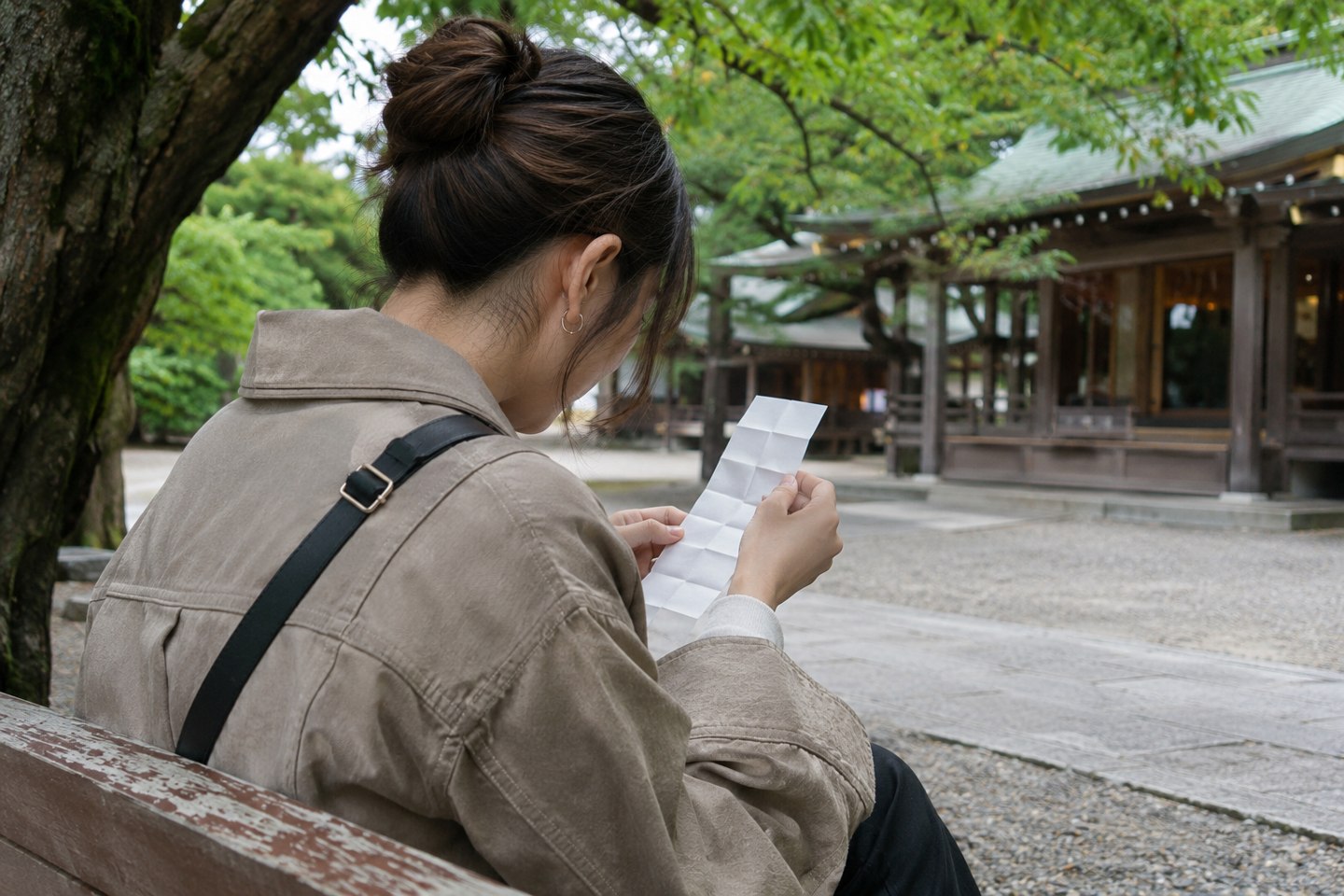
A paper fortune can look like a verdict when we read only its most dramatic word. Yet a slip also has a place, a method of selection, a longer text and a community that explains how to use it. Japanese omikuji offer a particularly revealing example. Some organize advice beneath a favourable or unfavourable fortune. At Meiji Jingu in Tokyo, the selection instead centres on a poem. Comparing those approaches opens a better question than whether a visitor has drawn the “right” result: what kind of attention does this particular practice ask for?
Begin with the place, not a universal rule
Omikuji are paper fortunes encountered at Japanese shrines and Buddhist temples. The Japan National Tourism Organization’s introduction describes a common procedure in which a visitor shakes a container of slender sticks, draws a numbered stick and receives the corresponding slip. It also describes other delivery methods. The physical act of drawing therefore does not identify a single unchanging format.
That distinction matters when a photograph becomes someone’s entire guide. A container, a slip and a rack can appear to explain themselves, while leaving out the instructions that connect them. Observe the local signs and ask staff when uncertain. A procedure seen at one site should not automatically become an instruction for every other site.
It also helps to identify the institution accurately. “Japanese fortune telling” is a broad description, not the name of a single religious authority. A shrine’s explanation and a temple’s explanation deserve to be read in their own settings. Comparing them can reveal differences without treating one as an incomplete version of the other.
A ranking is only part of the page
JNTO’s account presents familiar favourable and unfavourable fortune labels alongside more detailed subjects, including work, study and travel. It encourages attention to the explanation rather than discouragement at an unfavourable result. This describes a way the practice is understood and used; it does not establish that the slip can predict an individual’s future.
Consider an invented reading situation. A person planning an exhibition notices an unfavourable heading and stops there. Another person reads the rest, finds a caution about preparation and decides to inspect the venue’s requirements. The heading has remained the same. What changed is the reader’s response, and the second response produces something that can actually be checked.
This example is our own, not a translation of a temple’s oracle. Its purpose is to separate three different things: a label on paper, a person’s interpretation and an action in the world. Those can influence each other without becoming interchangeable. A practical improvement after reading a slip does not, by itself, prove the slip forecast the outcome.
Meiji Jingu offers a different kind of encounter
The shrine’s own English explanation of its omikuji describes a selection of thirty waka poems composed by Emperor Meiji and Empress Shoken, provided with English translations. It presents the poems as messages informed by Shinto ethics. The emphasis is on the meaning a poem may hold for its reader.
The Japan Tourism Agency’s interpretive text for Meiji Jingu names these slips omigokoro and distinguishes them from the usual fortunes graded by good or bad luck. This is a useful, specific counterexample to the assumption that every omikuji must announce a luck ranking.
For a reader, a poem changes the task. A verdict can invite immediate acceptance or resistance. A poem invites questions about imagery, emphasis and application. Its interpretation may remain open after the first reading. That openness need not be filled with an invented prediction about a relationship, an examination or a date.
A respectful comparison also preserves the authorship and setting of the text. Drawing a poem at a shrine does not turn it into an anonymous inspirational quotation. Keep the attribution and accompanying explanation with it. If you discuss it later, identify which text you actually received rather than treating your memory of its mood as the wording itself.
Drawing by chance is not the same as interpreting by chance
The selection procedure and the reading procedure answer different questions. A draw selects the text a person encounters. Reading asks what that text says, how its words relate and what the institution’s explanation contributes. Even when selection involves chance, interpretation still requires care.
Imagine two visitors receiving the same passage. One has been postponing a conversation; the other has been rushing through a project. They may notice different implications. That difference is evidence about how readers bring concerns to a text. It is not sufficient evidence that the text has diagnosed either life.
Translation adds another layer. A visitor reading English encounters choices about tone and emphasis made by a translator. Preserve the supplied explanation alongside the poem, and avoid treating a single isolated word as the complete message. If a line seems ambiguous, acknowledge the ambiguity instead of resolving it through an online list of supposedly universal fortune meanings.
This leaves room for personal meaning without requiring an unsupported mechanism. A visitor can value an encounter, preserve a memory or reconsider a habit while remaining clear about which conclusions arise from reflection.
The tied paper needs its own context
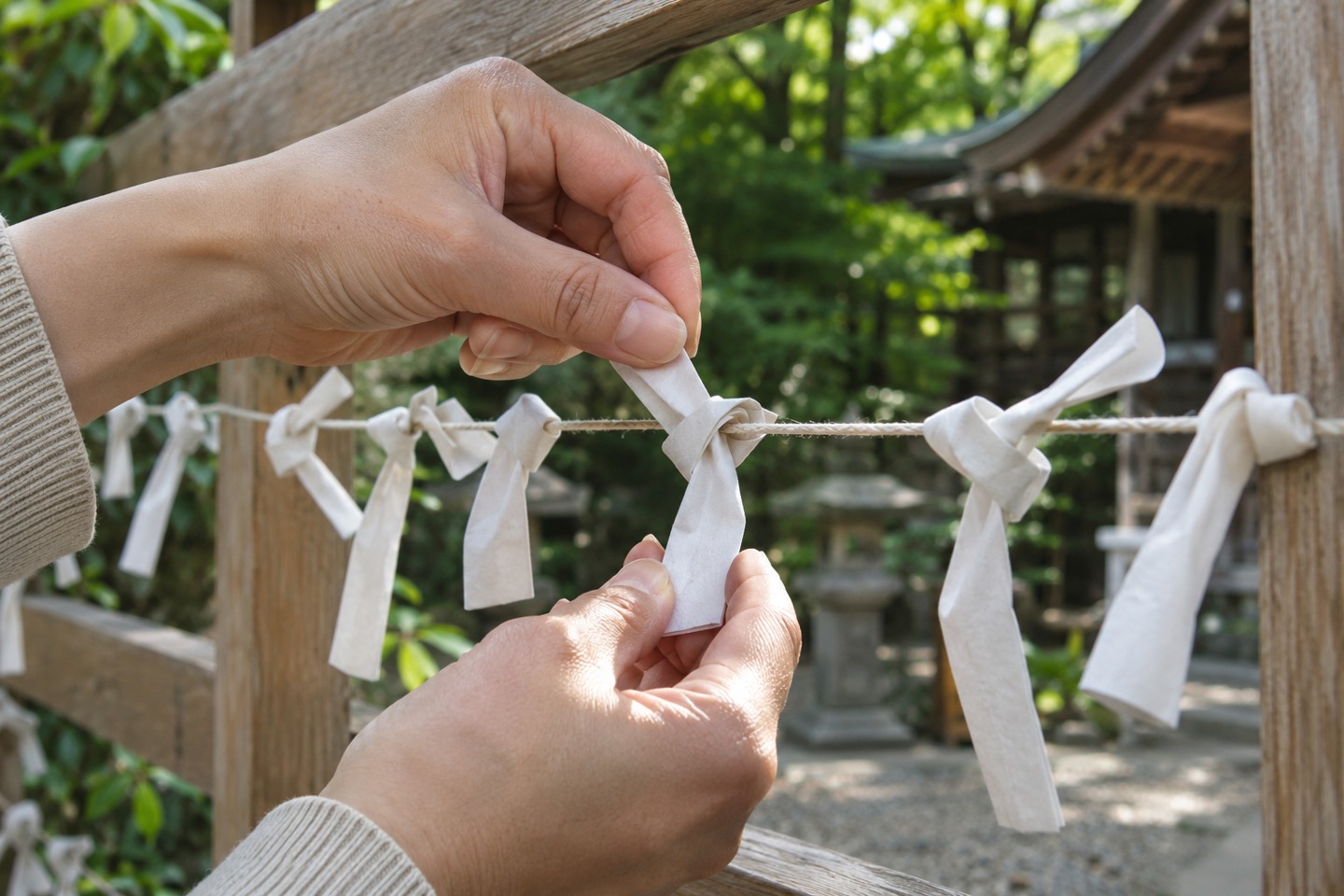
JNTO describes keeping some slips and tying unfavourable ones at designated locations, while noting that beliefs differ between institutions. The important practical word is “designated.” A rack or string provided for the purpose is different from any convenient branch, fence or architectural feature.
A cluster of white knots makes a striking image, but the image cannot tell us every visitor’s reason for tying one. It cannot reveal the content inside each fold, establish a person’s feelings or prove that all the slips carried the same result. Writing a caption that calls the whole rack “bad fortunes” may claim more than the photographer knows.
Our generated section image illustrates the handling of folded paper at a dedicated rack. It does not document a named site’s rule. The distinction is useful beyond this article: when viewing cultural imagery, ask whether the caption reports something observed, supplies an institution’s explanation or adds the author’s interpretation.
A careful reading exercise that keeps the source visible
For readers interested in the reflective side, try a short exercise after reading the actual instructions and explanation that accompany a slip. First, summarize the text in one sentence. Keep that sentence close to what is on the page, resisting the urge to insert a person or an event the text does not name.
Next, write one question the passage raises for you. For our imagined exhibition planner, it might be, “Which preparation have I been assuming somebody else will complete?” Then choose one observable action, such as confirming the installation time with the venue. The action should make sense even if the paper had never been drawn.
Finally, return to the record later. Note what you did, what happened and what remains unknown. Include details that did not fit your first interpretation. Otherwise, a flexible phrase can gradually become a story in which every outcome seems to confirm it.
This exercise is an editorial suggestion, not a shrine ritual or a replacement for religious guidance. Readers familiar with our Tarot Guides can apply the same discipline when moving from a symbolic image to a practical question. Similar reading habits do not make the traditions historically identical.
Let the longer message outlast the first reaction
The contrast between a graded fortune and a poem shows why a small paper object deserves a longer look. Identify the place, read the whole explanation, distinguish the draw from the interpretation and follow local handling instructions. A meaningful encounter can begin with surprise and continue through deliberate attention. What follows from it is a matter of reading and response, not something the most dramatic word on a slip can settle alone.
Sources and further reading
The linked Meiji Jingu, Japan Tourism Agency and JNTO resources support the descriptions of the practices. The exhibition example and reading exercise are original editorial analysis. Both images are original AI-generated photographic-style illustrative reconstructions of imagined contemporary scenes, not photographs of identified visitors or religious sites. For a different form of ritual consultation, our earlier story examines moon blocks and the framing of a question.